Gin Rummy King
- 4.8
- Rating
- 100.00K
- Installs
- Free
- Price
 Analysis by App-foxy
Gin Rummy King is the kind of card game I can open without needing to prepare for a long session. It presents itself as a focused gin rummy experience from SATORISYS PLAY, and after spending time with it, I found its biggest appeal in the way it keeps attention on the hand in front of me. There is no need to learn a large collection of unrelated systems before playing. The pleasure comes from reading the cards, deciding what to keep, and judging when a hand is ready to close.
That simplicity is also the main thing to understand before downloading it. This is a free card game aimed at players who already enjoy gin rummy or want a direct way to practice the basics. It is not the best fit if you are looking for a broad collection of card games, a story-driven adventure, or a heavily decorated social platform. Its identity is narrower, but that narrow focus gives each round a clear purpose.
The game has a Teen content rating and runs on Android 7.1 or later, which makes it accessible to a wide range of devices. Its current version is 1.1.2. The public response is encouraging, with a 4.7 average from around 800 ratings and more than 10 thousand installs. Those figures suggest a healthy early audience, although I would still judge it mainly by whether its pace and presentation suit the way you like to play.
You May Also Like

 Pandora - Music & Podcasts
Pandora’s Music Is Easy to Start, but Harder to Recover
Pandora’s strength is its low-effort path from a seed to a station. Its weak spot is how much confidence it asks you to place in connection, setup, and quiet recovery.

 8 Ball Pool
 Is Built on Rivalries, Rematches, and Routine
A close look at the rivalries, rematches, shared routines, and unanswered safety questions that turn a quick pool match into a persistent mobile community.

 Samsung Music
’s Quiet Strength Is Playing What You Already Own
Its reach comes less from spectacle than from dependable access to a personal library. That simplicity is both the app’s strongest retention engine and its ceiling.

 AccuWeather: Weather Radar
AccuWeather Review: A Quick, Clear Forecast for Everyday Decisions
For everyday plans, the best forecast is the one you can understand quickly. AccuWeather makes rain timing, radar, and local conditions easy to act on, with a few trade-offs.

 Hill Climb Racing
Why Hill Climb Racing Still Turns Crashes Into One More Run
A tiny car, a bumpy hill and one more upgrade: Hill Climb Racing keeps resurfacing because its simple chaos makes every near-miss feel personal.

 AliExpress - Shopping App
AliExpress Makes Global Shopping Feel Personal, but Shoppers Bear the Risk
AliExpress turns a global marketplace into a pocket-sized discovery engine. Its reach is useful, its shopping loop compelling, and its trade-offs easy to miss.
More From Our News Desk
View All News


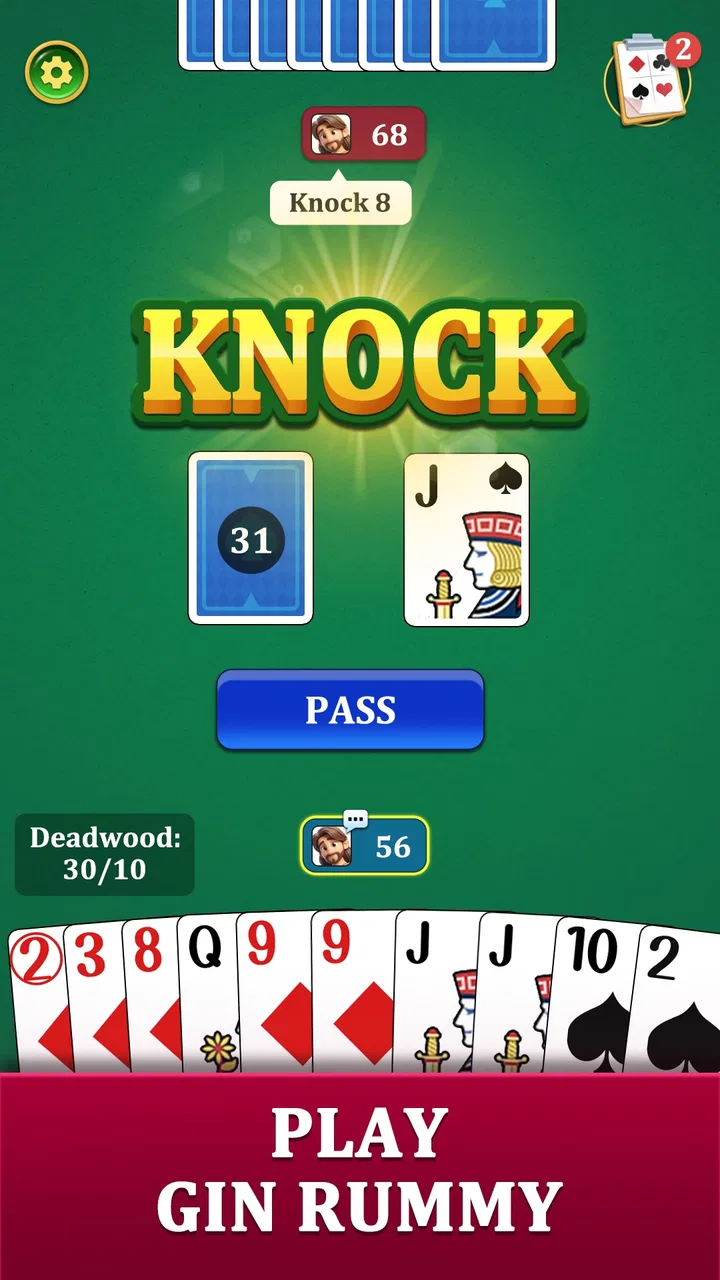
My first impression of the table and the play loop
My first useful test with a card game is not whether it looks impressive in the opening moments. I want to know whether the game makes the next decision obvious without making the decision itself obvious. Gin Rummy King works best when it gives me a clean mental space for that process. I look at my hand, identify possible sets and runs, discard a card that has become less useful, and reconsider the shape of the hand after the next draw.
That loop is familiar, but familiarity is not a weakness here. In gin rummy, small choices carry the experience. Holding a card because it might complete a sequence can be sensible, but it can also leave too many loose cards in the hand. Discarding a card that seems isolated may help reduce deadwood, yet it may also reveal useful information to the opponent. The game’s value comes from letting those decisions breathe rather than burying them beneath a complicated interface.
I especially like this format for short breaks. A round can give me a complete mental task instead of the vague, endless feeling I get from some mobile games. I can play during a commute, while waiting for an appointment, or at the end of the day when I want something more engaging than scrolling but less demanding than a large strategy game. The important distinction is that the game still asks me to think; it is not simply a way to make time disappear.
New players should spend their first few hands learning the visual logic of the table rather than trying to play perfectly. Watch how the discard pile changes the value of your remaining cards. Notice when you are holding too many cards that depend on one another. A practical habit is to review your hand after every draw and ask one direct question: if the next card never helps, which card would I most regret keeping? That question often produces a safer discard than chasing several possible combinations at once.
A direct entry point for gin rummy players
For someone who already knows gin rummy, the attraction is immediate. You can concentrate on timing, memory, and risk instead of learning a new rule set. For someone who only knows casual card games, the first barrier is understanding why a hand that looks nearly complete may still be dangerous. The game becomes more satisfying once you stop treating every connected card as equally valuable and start weighing the chance of completing it against the deadwood it forces you to carry.
I would not describe the experience as a substitute for playing around a real table with friends. A physical deck has conversation, pauses, and the small social tension of watching another player hesitate. This mobile version is better understood as a convenient solo card session. It gives me access to the decisions of gin rummy when I do not have another person available, but it cannot reproduce the warmth or unpredictability of a face-to-face game.
The free price makes that distinction easier to accept. I can try the game without making a financial commitment, which is useful if I am unsure whether I enjoy gin rummy beyond occasional family games. The trade-off is that a free mobile game may feel less personal than a physical deck or a dedicated multiplayer table. If your priority is conversation, shared laughter, or a strong sense of presence, the traditional alternative remains better.
How the visual language supports the card-game mood
The setting of a card game does not need a fictional world to create atmosphere. Here, the cards and the table are the world. That gives the presentation a practical responsibility: the visual language should help me read the hand quickly, maintain focus during repeated rounds, and make the act of drawing and discarding feel deliberate rather than disposable.
I found the strongest mood in the contrast between stillness and decision. The table does not need constant movement because the important action happens in my head. A good card interface should feel calm when I am studying a hand and decisive when I commit to a discard. That relationship between quiet presentation and sharp choices is more appropriate for gin rummy than an overly animated design would be.
This also affects how long I can play. A visually noisy card game can make a thoughtful round feel tiring, especially when I am comparing several possible runs or trying to remember what has already appeared. Gin Rummy King benefits from being treated as a focused tabletop activity rather than a spectacle. The less the presentation competes with the cards, the more room I have to notice patterns.
One useful way to approach the visual design is to separate decoration from information. Decoration establishes the mood, but information tells me what I can safely do next. When I play, I pay attention to the hierarchy of the hand: cards I am actively building around, cards that are merely hopeful, and cards that are becoming deadwood. That mental grouping is more important than any surface flourish, and the game works when the presentation lets me maintain it without friction.
The setting is strongest when it stays out of the way
I would have preferred a broader sense of place if I were looking for a themed card adventure, but that is not what this game is trying to be. Its setting is intentionally limited to the act of playing. That can feel plain during a long session, yet it also means I am not pulled away from the rules by unrelated collectibles, characters, or story interruptions.
This is where the game will divide players. Someone who wants a richly decorated casino-style experience may find the atmosphere restrained. Someone who values a readable table and a quick route into a round may see that restraint as a strength. My own view sits between the two: I appreciate the focused presentation, but I would choose another game when I want spectacle or a stronger sense of progression outside the cards.
The visual mood also suits players who use card games as a decompression tool. After a busy day, I do not always want flashing effects or a demanding campaign. A quiet hand gives me a small, bounded problem. I can think through it, accept a bad draw, and begin again without feeling that I have lost hours to a larger commitment.
Sound, rhythm, and the feel of a complete round
Sound matters in a card game because it tells me whether the experience is meant to feel relaxed, tense, playful, or competitive. Gin Rummy King is most convincing when its audio presence supports the rhythm of the hand instead of trying to become the main attraction. The natural rhythm is simple: draw, evaluate, discard, observe, and repeat.
That rhythm can be surprisingly absorbing. A hand begins with possibilities, narrows as cards are revealed, and eventually reaches a point where I have to stop waiting for a perfect arrangement. The pacing is not about fast reflexes. It is about knowing when further improvement is less valuable than reducing risk. That makes the game feel closer to a quiet puzzle than to an action title, even though every turn changes the situation.
My advice is to avoid rushing the discard decision just because the game is available on a phone. Mobile games often encourage quick taps, but gin rummy rewards a pause. I look at the opponent’s visible choices, reconsider whether a card could be useful to them, and then compare that concern with the cost of keeping my own deadwood. This extra second is where much of the game’s personality appears.
The pacing is also useful for beginners because it creates a natural learning cycle. A poor discard is not just a mistake; it is feedback about how the hand was structured. If I repeatedly hold high cards while waiting for a combination, I learn that potential is not the same as value. If I discard connected cards too early, I learn that reducing immediate deadwood can destroy a promising route. The game teaches through repetition rather than through a long explanation.
Why the rhythm works better for some players than others
Players who want quick reactions may find the turns too measured. There is no substitute for a faster arcade-style card game if your ideal session is based on speed and constant stimulation. Gin Rummy King asks for patience, and that patience can feel like a limitation when I am tired or distracted.
On the other hand, the measured pace makes it a good companion for a routine. I can play one hand during a short pause, put the phone down, and return later without needing to remember a complicated story. The game’s repeatable rhythm makes it suitable for light practice, especially when I want to improve at recognizing deadwood and reading the likely value of the discard pile.
A small but important tip is to treat the end of a hand as part of the learning process. I do not only look at whether I won or lost. I ask which card stayed in my hand too long, which draw changed my plan, and whether I waited for a combination that was unlikely from the information available. This turns a casual round into deliberate practice without making the experience feel like homework.
Where the mechanics and presentation meet
The best part of Gin Rummy King is the fit between its straightforward format and the kind of attention gin rummy requires. The game does not need elaborate systems to create tension. The tension comes from incomplete information. I know my own hand, I can observe the discard choices, and I must infer what the other side may be collecting without ever seeing the full plan.
That makes every discard a communication problem as well as a hand-management problem. A card that is useless to me may be exactly what the opponent needs. At the same time, refusing to discard it can leave my own hand overloaded with possibilities. I enjoy this trade-off because it prevents the game from becoming a purely mathematical exercise. I am managing my cards while trying not to improve someone else’s position.
One of the most useful advanced habits is to track categories rather than individual cards. I mentally divide the hand into cards that form a confirmed group, cards that have one realistic connection, and cards that are mostly wishful thinking. When a new draw arrives, I compare it with those categories instead of automatically adding it to the most exciting combination. This helps me avoid the common trap of keeping several incomplete ideas alive at the same time.
Another practical approach is to change plans earlier than feels comfortable. If two or three turns have passed without helping a fragile sequence, I consider whether the sequence is costing more than it is worth. This is particularly important when the hand contains high-value unmatched cards. Waiting for a perfect run can feel clever, but sometimes the better play is to accept a modest loss in potential and protect the rest of the hand.
The game is also a good fit for people who enjoy repeatable systems with room for improvement. I can return to the same basic rules and still find new decisions because the order of the cards changes the problem. That said, players who need a strong progression system, extensive customization, or a large variety of modes may eventually want a broader card title. The focused design is an advantage for clarity, but it naturally limits variety.
Everyday use cases and practical trade-offs
Imagine having ten minutes before leaving for work. A full strategy game would be awkward because it might demand a long uninterrupted session, while a simple matching game might feel too passive. This is where the app makes sense. I can begin a hand, make a few careful decisions, and either finish or stop at a natural point. The mental activity is meaningful without becoming a major appointment.
It also works for a player rebuilding confidence after a long break from card games. Instead of joining a competitive table immediately, I can use repeated hands to refresh my understanding of runs, sets, deadwood, and timing. The low entry cost removes pressure, and the familiar structure makes it easier to notice improvement from one session to the next.
However, I would skip it when I specifically want live conversation or a shared match with friends. A physical deck is better for a family evening, and a dedicated online multiplayer game is better if real-time opponents and social interaction are the priority. I would also choose a larger card collection if I wanted to switch between gin rummy, solitaire, poker, and other formats without changing apps.
Battery and attention are practical considerations too. A quiet card game is less mentally exhausting than a visually aggressive action title, but it still requires concentration. I would not play while walking, driving, or doing anything that needs my full awareness. The ability to pause a routine is convenient, yet the quality of the experience depends on giving each hand enough attention to make the decisions meaningful.
Who should download it and what to expect over time
Gin Rummy King is best for a player who wants one recognizable card game presented without unnecessary detours. It suits beginners who are willing to learn by playing, experienced gin rummy fans who want a portable option, and anyone who enjoys short strategic sessions with a calm tabletop mood.
I would be more cautious if you dislike repeating the same core activity. The game’s appeal depends on whether the basic draw-and-discard cycle remains interesting to you. There is no point downloading it simply because it is free if you already know that you need constant novelty. Free access lowers the risk of trying it, but it does not change the game’s deliberately narrow identity.
The audience response gives it a reassuring starting point. An average of 4.7 from around 800 ratings and an audience above 10 thousand installs indicate that it has found players who appreciate its approach. I do not treat those figures as proof that it will suit everyone, but they do make the game feel like a credible choice rather than an obscure experiment.
The Teen rating is worth keeping in mind for households where age suitability matters. Parents should still consider the individual player and the context in which the game will be used, but the rating gives a clear general guide. The Android requirement of 7.1 or later is also modest enough that compatibility should not be a major obstacle for many users with older devices.
Because the developer is SATORISYS PLAY and the current release is 1.1.2, I see the game as a focused product that may appeal most to people who value its present form rather than expecting a huge ecosystem. I would install it for the card play first, not for promises of a constantly expanding platform. That expectation keeps the experience honest and prevents disappointment caused by wanting features that are not central to its design.
My final view of its atmosphere and value
What stays with me after playing is the coherence between the game’s mood and its mechanics. The card table creates a contained setting, the restrained presentation leaves room for thought, and the turn-by-turn rhythm gives each decision a little weight. Nothing needs to shout for attention because the uncertainty in the hand already supplies the drama.
The real strength is its disciplined focus: every round gives the atmosphere, pacing, and card decisions the same job. That focus makes it easy to recommend to someone who wants a portable gin rummy session rather than a large mobile entertainment package. I can pick it up for a short break, play carefully, and leave with the feeling that I exercised my attention instead of merely filling time.
Its limitations are equally clear. The experience may feel too restrained for players who want spectacle, social play, or several different card formats. It cannot replace the personality of a real table with friends, and its repeated structure will not satisfy people who need constant change. Those are not flaws I would hide; they are the boundaries that define the game.
For me, the decision comes down to one question: do you enjoy the small tension of deciding what to keep when every card has a possible future? If the answer is yes, Gin Rummy King is an easy free game to try. It offers a calm, readable setting for practicing judgment, and its best moments arrive when I stop chasing perfect hands and start making sensible decisions with the cards I actually have.
FAQs for Gin Rummy King
01What is Gin Rummy King and how does it differ from other card games?
Gin Rummy King is a digital adaptation of the classic card game Gin Rummy, available on Android and iOS. It offers a user-friendly interface and engaging gameplay that captures the essence of the traditional game. Unlike some card games, Gin Rummy King focuses on strategic play and skill, allowing players to compete against friends or AI opponents.
02Can I play Gin Rummy King offline, or is an internet connection required?
Gin Rummy King offers both online and offline modes. You can enjoy the game offline by playing against AI opponents, which is great for practice or when you don't have internet access. However, to challenge friends or participate in tournaments, an internet connection is required for a seamless multiplayer experience.
03Are there in-app purchases in Gin Rummy King, and are they necessary for gameplay?
Gin Rummy King includes in-app purchases that offer additional features such as custom card decks, ad removal, and bonus coins. However, these purchases are optional and not necessary to enjoy the core gameplay. Players can fully experience the game without spending money, although purchases can enhance the experience.
04What kind of support is available if I encounter issues with Gin Rummy King?
If you encounter any problems while playing Gin Rummy King, the app offers a support system accessible through the settings menu. You can contact the support team via email for technical assistance, or visit the FAQ section in the app for common troubleshooting tips and game guides.
05Is Gin Rummy King suitable for all ages, and does it offer any educational benefits?
Gin Rummy King is suitable for players of all ages, offering a fun and engaging way to improve strategic thinking and decision-making skills. While it's primarily a form of entertainment, the game encourages players to enhance their memory, pattern recognition, and ability to plan ahead, making it beneficial for cognitive development.
Pros
- User-friendly interface
- very intuitive.
- Smooth and responsive gameplay experience.
- Various modes keep the game engaging.
- Minimal ads
- enhancing user enjoyment.
- Customizable avatars for personalization.
Cons
- Limited tutorials for beginners.
- No offline mode available.
- In-app purchases can be pricey.
- Occasional connectivity issues.
- Lacks advanced strategic features.

Gin Rummy King
Gallery